There are several common ways to learn the Pentatonic Scale on guitar. One of the easiest is to stop thinking about large scale positions and look for two much smaller shapes.
If you do not yet know what the Pentatonic Scale is, start here: The Pentatonic Scale
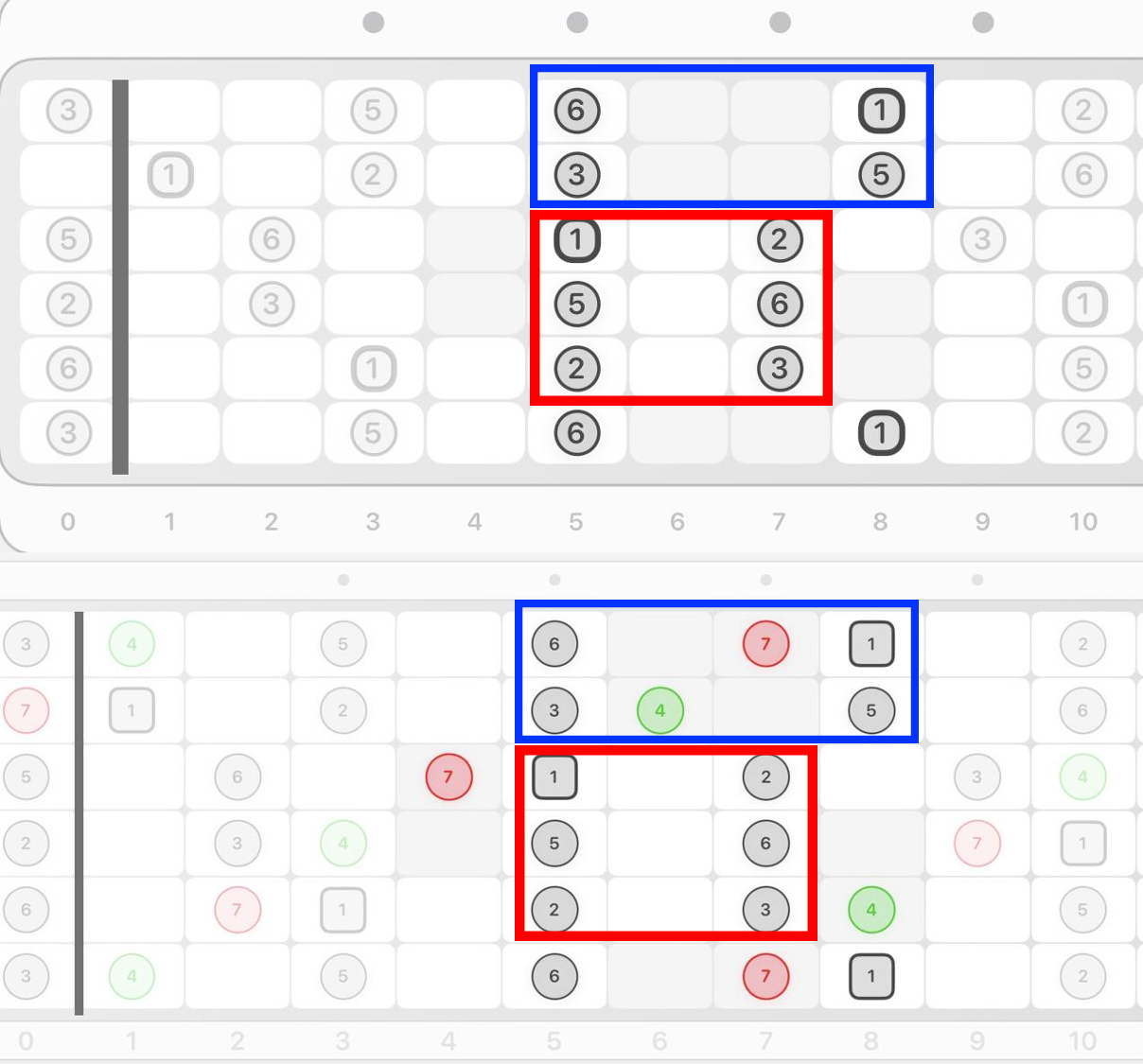
Look at the first diagram. The pentatonic notes form two simple boxes: a long, thin box (blue) and a shorter, wider box (red). These are not two different scales — they are small pieces of the same repeating pattern.
The first diagram shows the pattern as C Major Pentatonic. The red and blue boxes repeat across the fretboard, joining together to form the whole scale. The same pattern can also be viewed as A Minor Pentatonic — the notes and shapes do not change, but the root note changes, so the interval labels change too.
There is another useful trick hidden in these shapes. Look at the second diagram. Add the two missing notes to the pentatonic pattern and you have the full Major Scale. The pentatonic framework is still there — you have simply added two notes around it. Many other scales can be approached in a similar way.
This is one of the big advantages of learning scales this way. The five pentatonic notes give you a simple framework that is easy to see and remember. The extra notes then add more character to the sound and can help the scale fit more closely with the chords being played. Instead of learning every scale as a completely new pattern, you can build on shapes you already know.
This idea is not new. This video explores the two-shape approach in much more detail: Pentatonic two-shape approach
Scale Wizard lets you explore these patterns in different keys and positions and see how the shapes fit together across the fretboard.